Keep It From Becoming a Secret, Keep It Safe… or How to Store Your Pasta 🍝 Weekly Notes from Pasta Explorer
Issue 26 — May 26, 2026
Hello Pasta-Curious Persons!
Curiosity has a way of following me home from the pasta aisle. One week it’s a familiar shape I know I’ll use. Another week it’s something unusual that I absolutely had a plan for when I bought it, even if that plan gets a little foggier once the box disappears into the pantry.
That’s part of the fun, but it can also get away from me. A pasta shelf can become a record of good intentions pretty quickly, with everyday favorites, half-used packages, and interesting shapes all waiting for their turn. This week, I’m looking at how to keep that sense of exploration from turning into pantry clutter.
🍝 Main Course:
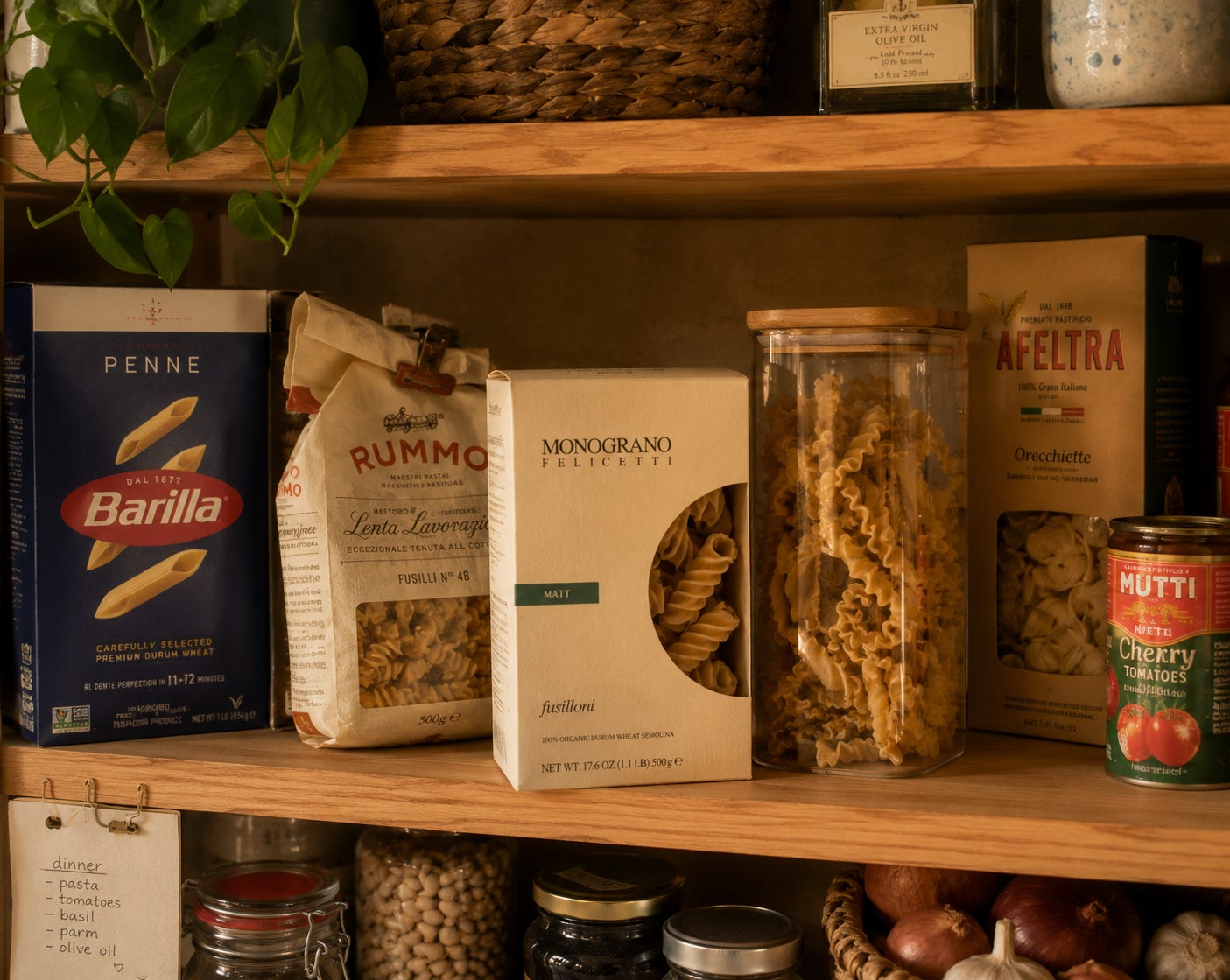
Storage is not the most exciting part of pasta exploration, but it might be one of the quiet habits that makes the exciting parts easier. I love picking up a new shape, planning what sauce to use with it, and imagining what it might do in the bowl. Those plans and dreams can only come to fruition if the pasta is still in good shape when I finally reach for it. A forgotten box, a half-open bag, or a mystery container in the back of the pantry can turn possibility into hesitation pretty quickly.
So I’ve started thinking of storage as part of the exploration process. Not in a fussy way. I’m not trying to create a museum-quality pasta shelf where everything is lined up like a display. I just want the pasta I was excited to buy to still be worth cooking when its moment comes.
Dried pasta is wonderfully durable, which is one of the reasons I love keeping different shapes on hand. But durable doesn’t mean invincible. Time, air, moisture, heat, and pantry chaos can all work against it. A box can sit around for a long while, forgotten and buried at the back of the shelf, patiently awaiting rediscovery, but there is a difference between pasta that is technically still there and pasta I’m excited to build dinner around.
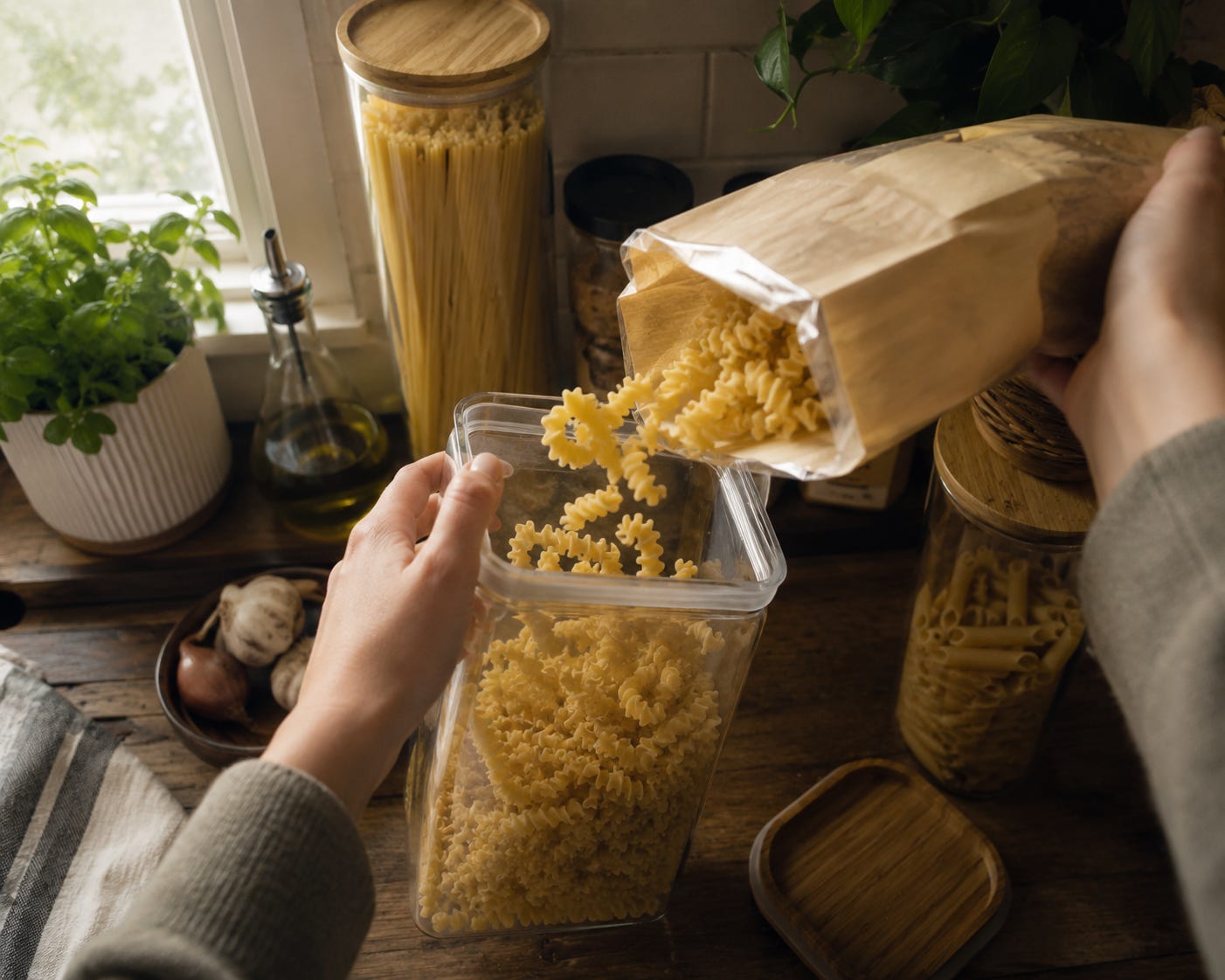
For regular dried pasta, the basic rule is simple: cool, dry, and sealed. An unopened box usually takes care of most of that for me. Once I open it, though, I try not to trust the original package too much. A box flap that sort of closes or a bag folded over once and shoved behind the rice is not much of a system. If I know I won’t use the rest soon, it’s better to move it to a sealable container or a resealable bag. The goal is to keep moisture out, keep the pasta protected, and make sure I can identify it later.
Fresh pasta is different. You can’t treat it like dried pasta. Fresh or refrigerated pasta has a shorter clock, and that is part of its nature. It can be wonderful, tender, and full of character, but it does not have the long patience of a box of dried semolina pasta. If you buy fresh pasta, try to have a plan for it when you get it. Keep it cold, pay attention to the date, and do not assume it will wait around politely while you change your mind three times about dinner.
Specialty pastas are worth thinking about too. Whole wheat pasta, legume-based pasta, flavored pasta, filled pasta, and more delicate shapes may not all age in quite the same way as a plain box of dried spaghetti or penne. That does not mean they need to be treated with fear. It just means I try to use the more interesting or more fragile things while they are still at their best. If I bought the spinach pasta, chickpea pasta, or fancy regional shape because I was curious, I should probably let that curiosity win before the box becomes pantry decoration.
The system that works best for me is simple. Open pasta gets sealed. Similar shapes stay near each other. Older boxes move forward. Unusual shapes stay visible. If I move something into a container, I try to label it, because “long twisty one” is not always enough information when I’m standing in the kitchen later. None of this has to be complicated. It just has to help future me make a better dinner choice.
I like the idea of a pasta shelf as a little map of future meals. A few sturdy everyday shapes. A couple of interesting finds. Maybe something fresh in the refrigerator with a plan attached to it. When the pantry is cared for, it feels less like storage and more like preparation.
That is the real value of these small habits. They protect the pasta, reduce waste, and make exploration easier to actually follow through on. A well-kept pasta shelf does not make dinner by itself, but it does make the next experiment feel a lot more possible.
🍝 A Quick Tip from the Explorer
When I open a box or bag of pasta and know I won’t finish it right away, I try to seal it in a way that future me will understand. A container, a resealable bag, or a good clip all work, but the important part is keeping it dry, keeping it visible, and making sure I still know what it is later. Pasta storage does not need to be fancy. It just needs to keep the next bowl easy.
🍝 Three Small Ways to Explore More
🍝 Do a quick pasta shelf check this week. Look for open boxes, half-used bags, or mystery shapes hiding in the back. Move anything older toward the front so it has a better chance of becoming dinner instead of pantry archaeology.
🍝 Pick one opened pasta package and give it a better home. That might mean a container, a resealable bag, or even just a better clip. The goal is simple: keep it dry, keep it protected, and make sure you can still tell what it is later.
🍝 Choose one unusual pasta shape you already have and make a plan for it. If you bought it because you were curious, let that curiosity lead somewhere. Storage works best when it protects the pasta and keeps the invitation to explore visible.
🍝 Closing Thought
A good pasta shelf is really a shelf full of future possibilities. Every box, bag, and shape is something I meant to explore when I brought it home. Taking care of that pasta is a small way of keeping those possibilities alive, so the next time I open the pantry, I’m not starting from clutter or guesswork. I’m starting from an invitation.
See you next week, and thanks for stopping by!
-Pasta Explorer
Disclaimer:
Pasta Explorer is all about curiosity, creativity, and the joy of discovery through food.
This content is designed to inform, inspire, and celebrate culinary exploration, not to replace professional dietary, nutritional, or medical advice.
If you have specific health or dietary concerns, please consult a qualified professional.